Orphaned Objects
I’ve started collecting paintings and objects from second hand stores, garage sales, and rummage sales. I see my collecting as a temporary waystation for handmade and artist-made items that have lost their original context but not their meaning. These objects—wooden toys, pottery, paintings, and artifacts—are held for a time, appreciated for their care and intention, and then allowed to continue on to new homes.
Each piece is part of an ongoing story. My role is not to collect permanently, but to witness, preserve, and pass along.
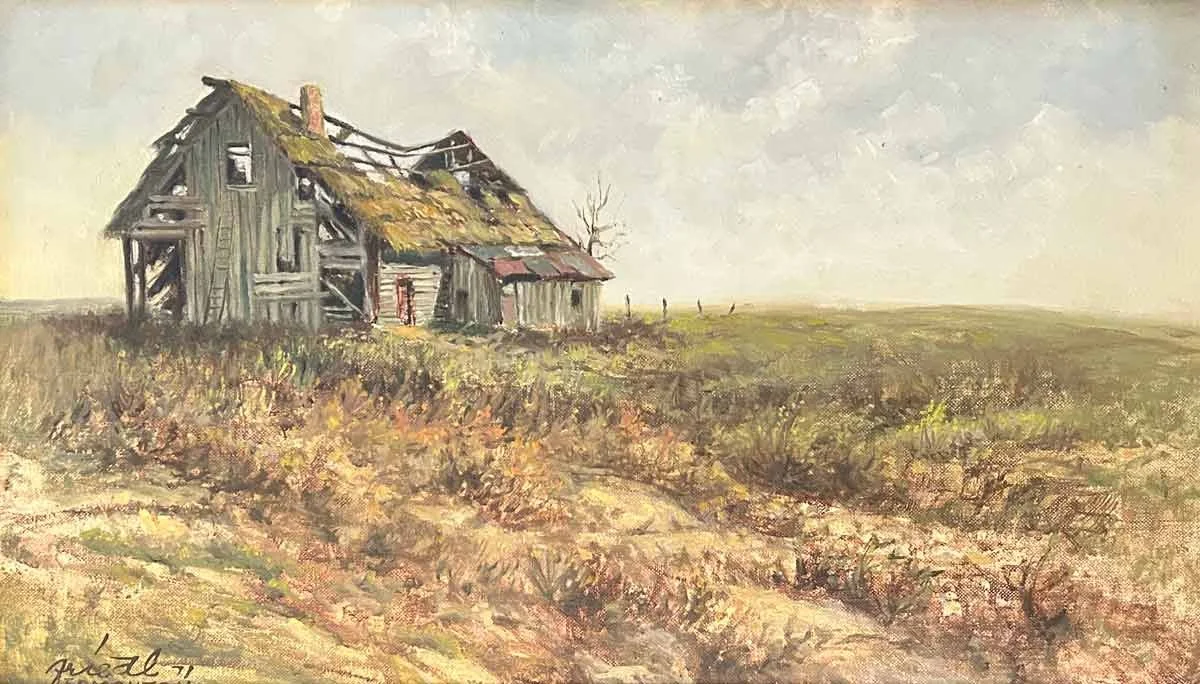
Ferdinand Friedl
A quiet prairie barn, painted in Edmonton in 1971 and sold through a local art shop. This small work by Ferdinand Friedl is less about nostalgia than it is about presence — a record of how art circulated, what it depicted, and how everyday landscapes were once brought home and lived with.
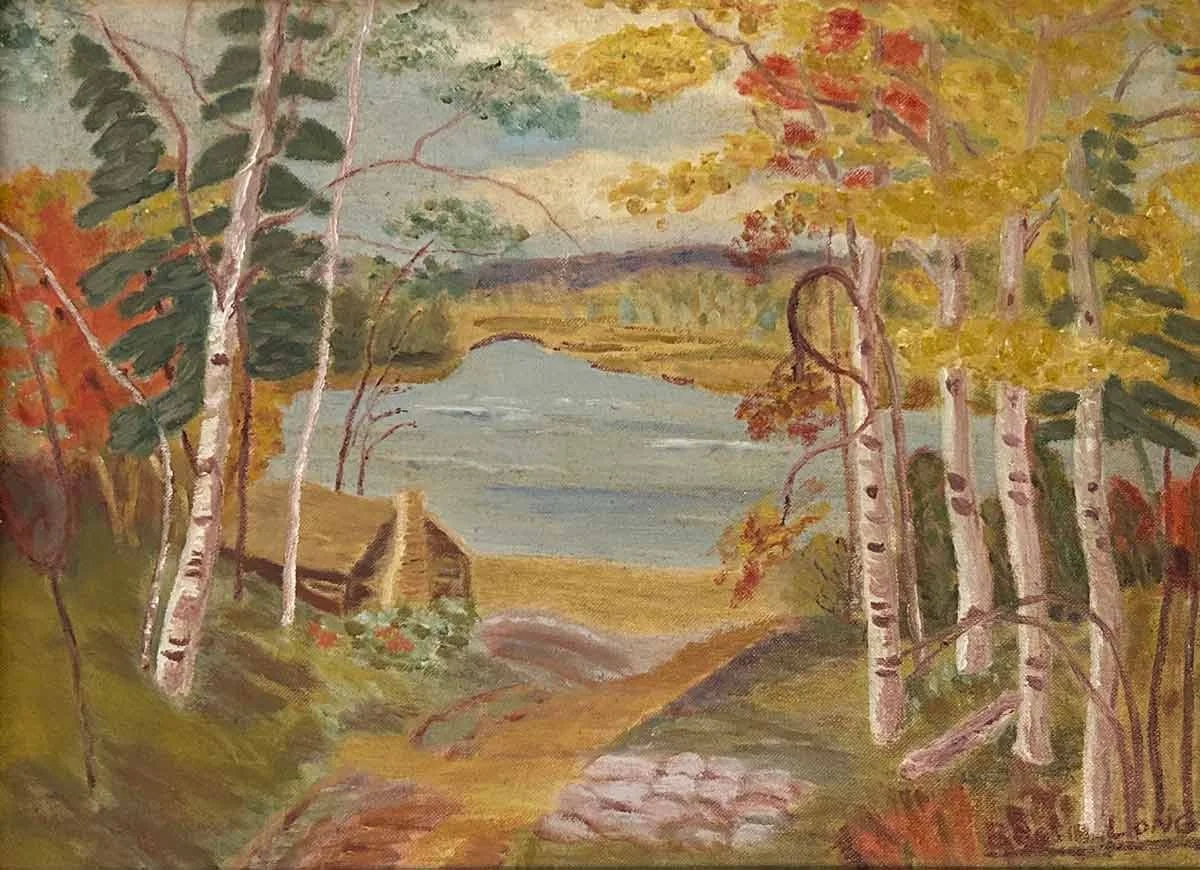
B. Long
A winding path, a quiet cabin, and trees glowing at the edge of winter—signed B. Long, and painted with a calm, deliberate attention that rewards time spent looking.
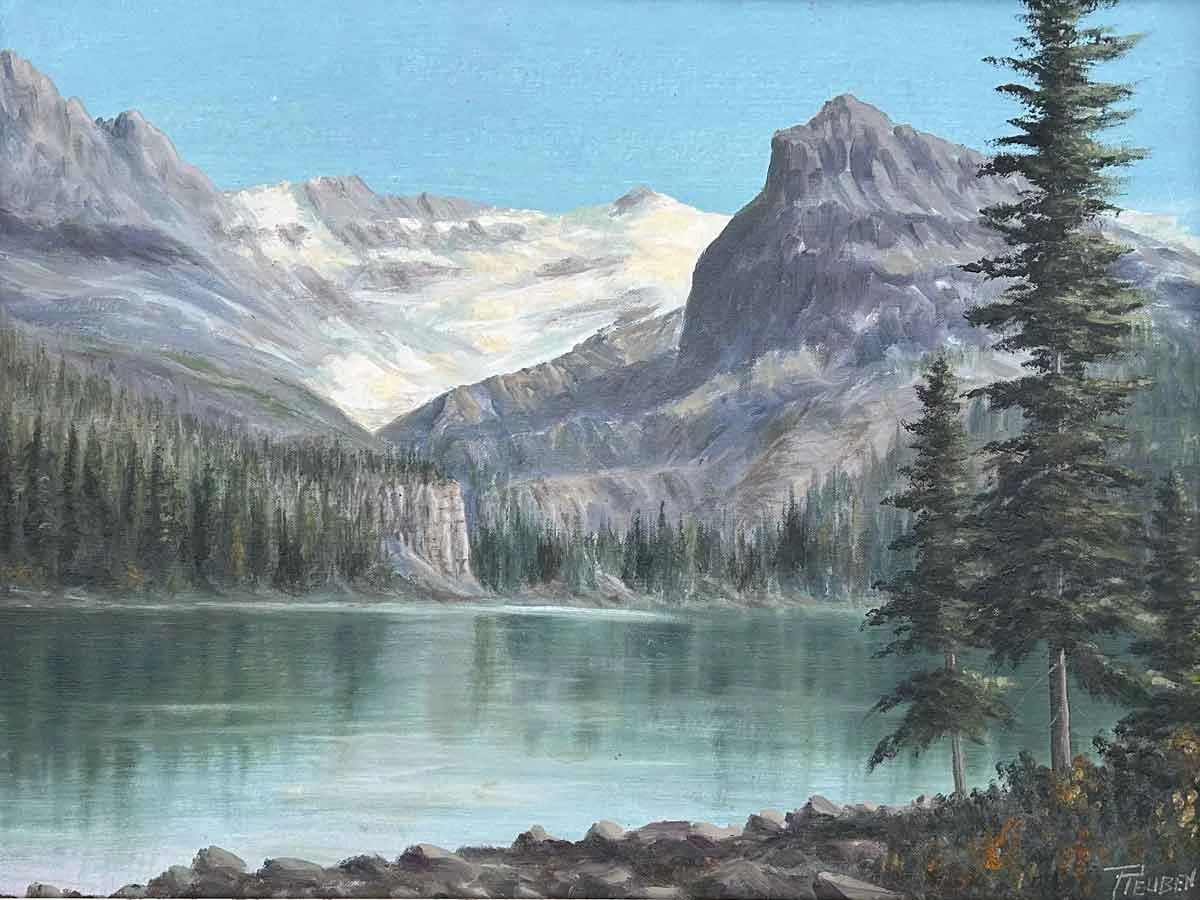
Reuben Axel Carlson
A quiet mountain lake, painted by someone who lived close enough to return again and again. This mid-century landscape by Reuben Carlson reflects a regional practice rooted in familiarity, observation, and place — not spectacle, but presence.
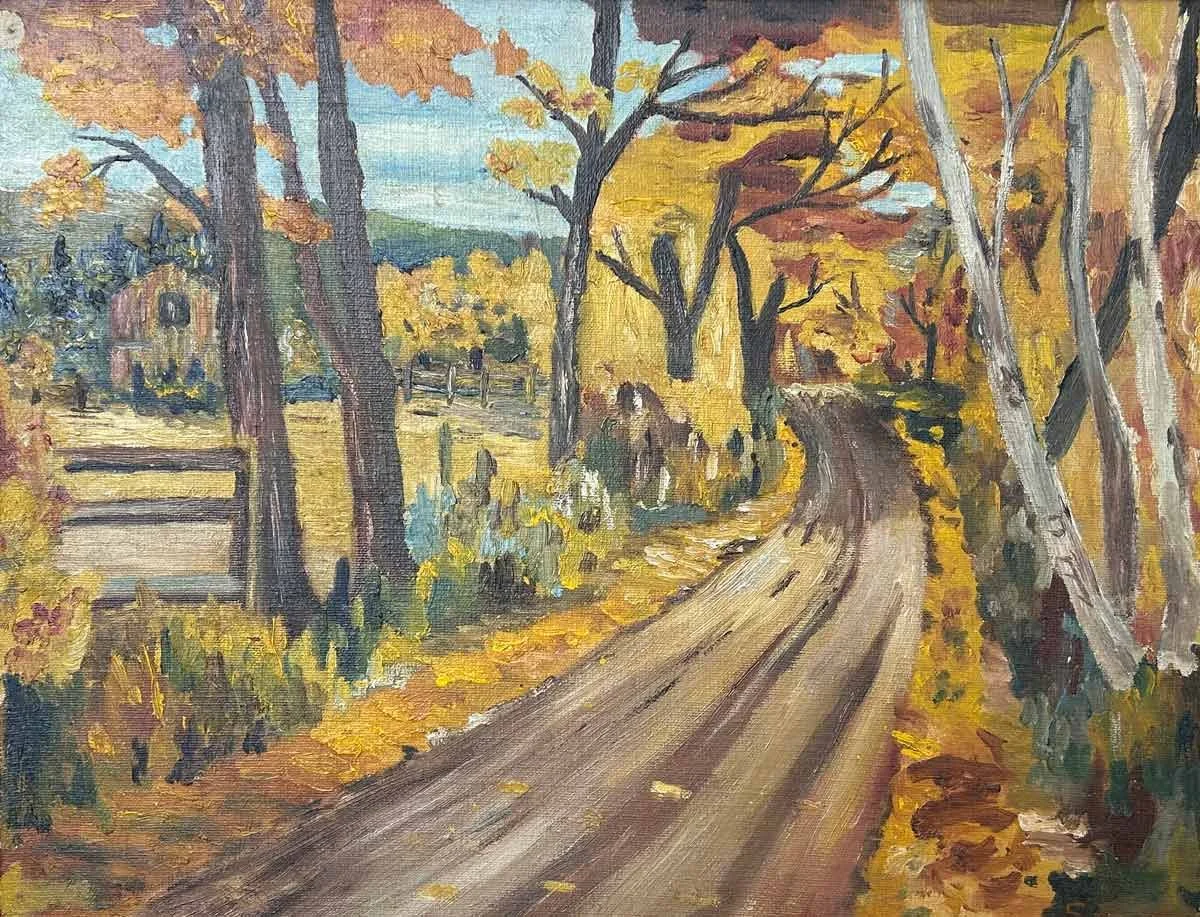
Stanley C. Riviere
A winding road, autumn light, and a paper trail that refuses to disappear. This 1951 exhibition painting by Stanley C. Riviere reminds us that mid-century Canada quietly celebrated everyday creativity — and that those stories are still worth holding onto.
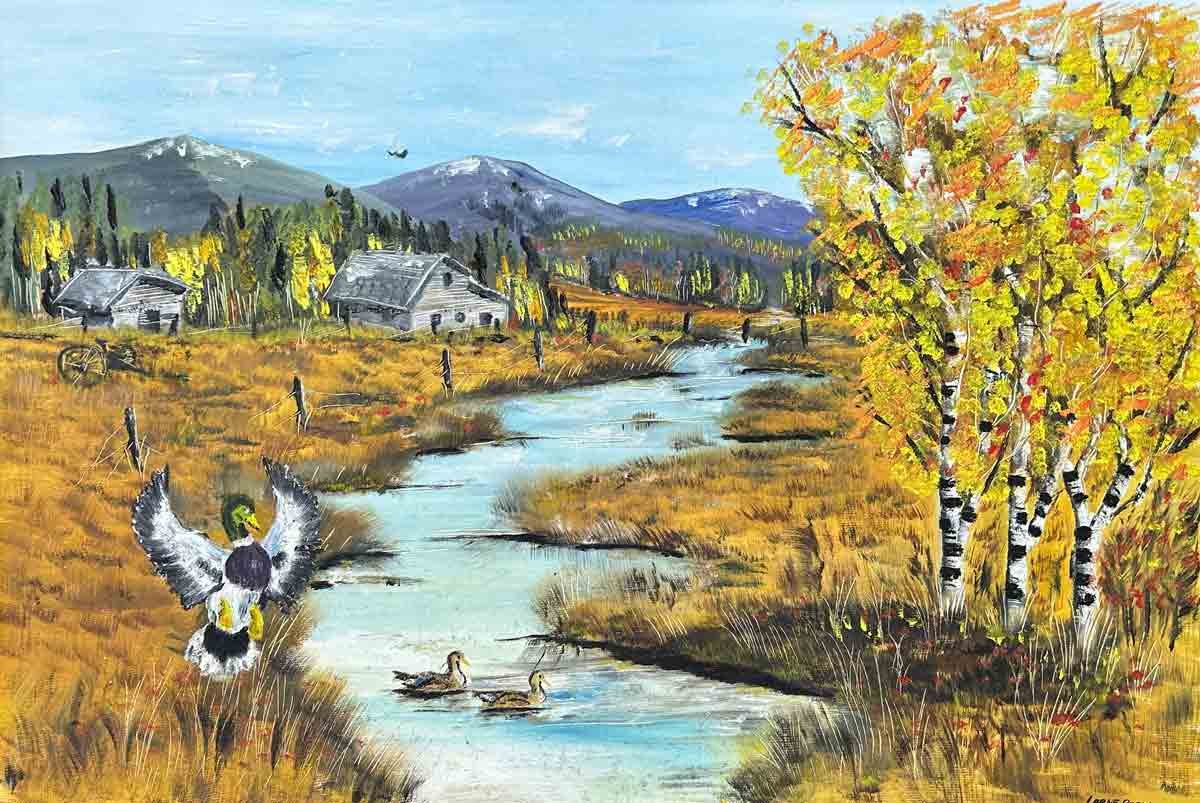
Lorne Presniak
A signed landscape by Lorne Presniak, depicting a rural creek, ducks, and autumn trees. A quietly composed scene preserved without formal record beyond the name on the canvas.
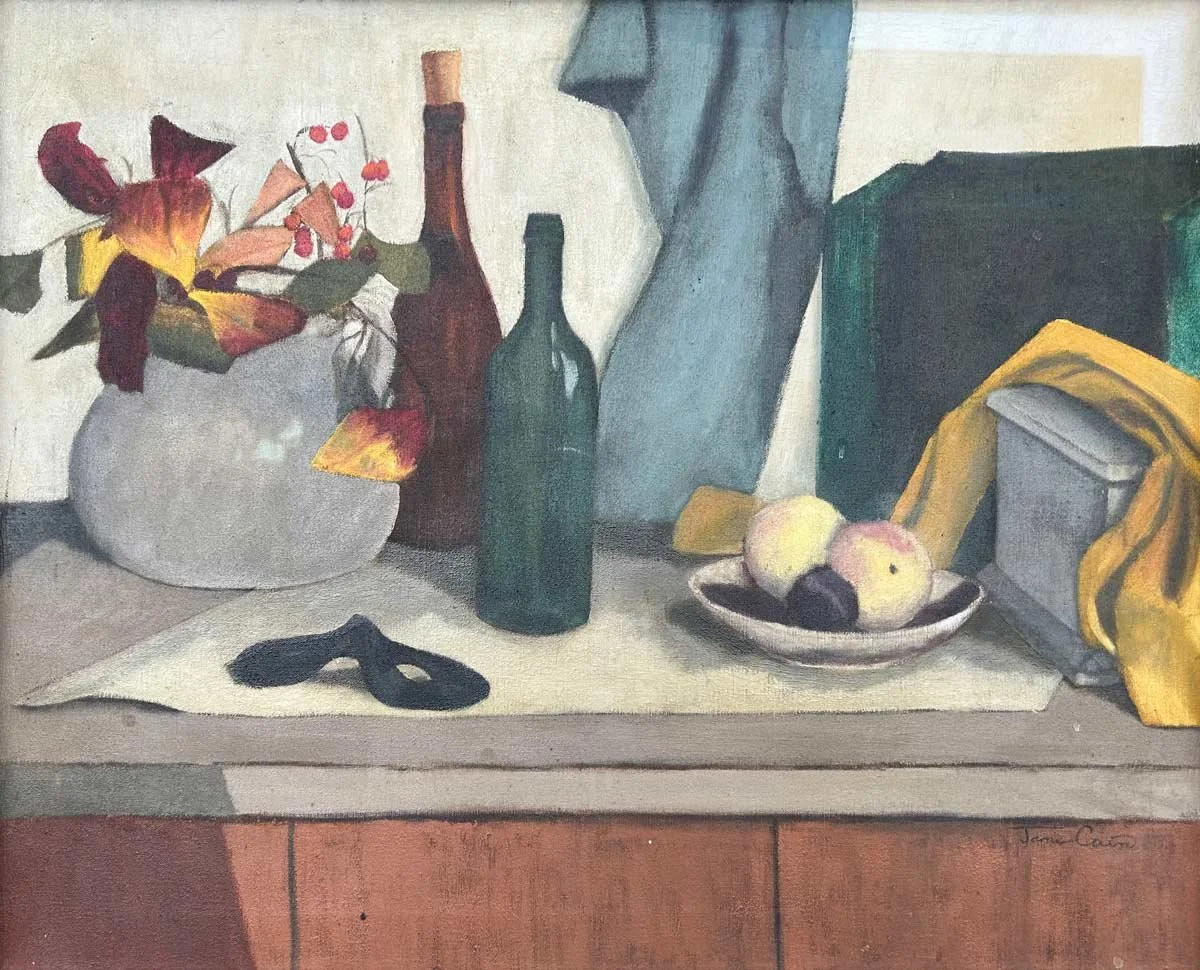
Jane Cain
A still life signed Jane Cain, carrying both an artist’s name and a traceable chain of ownership. Quietly domestic, carefully composed, and possibly connected to a Calgary-based woman artist whose work lived outside public record.
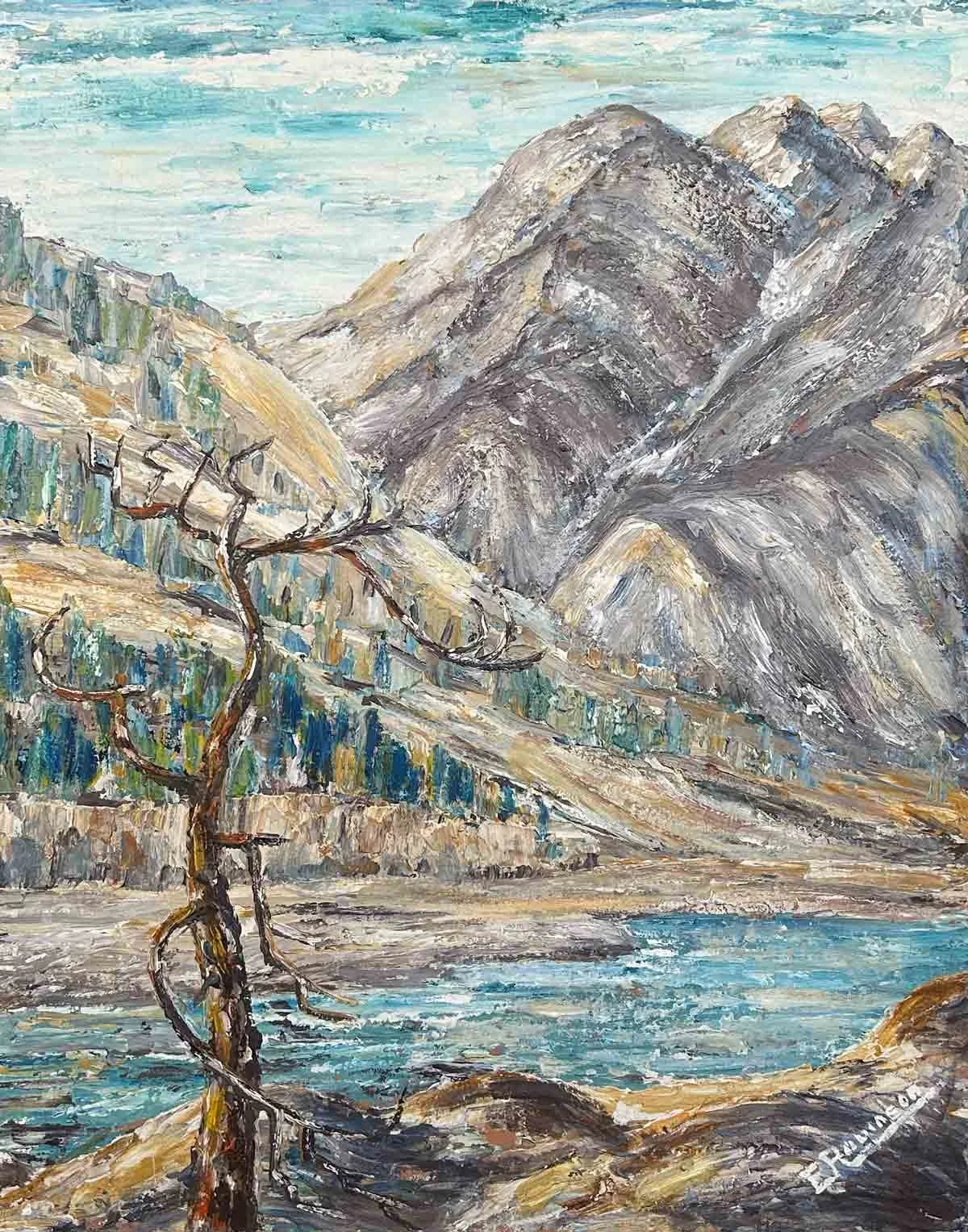
E. Robinson
Two wood-panel landscapes by E. Robinson, each named and rooted in the Fraser Canyon. Steamboat Rock and Mt. Skihist, painted with weight, texture, and a clear commitment to place.
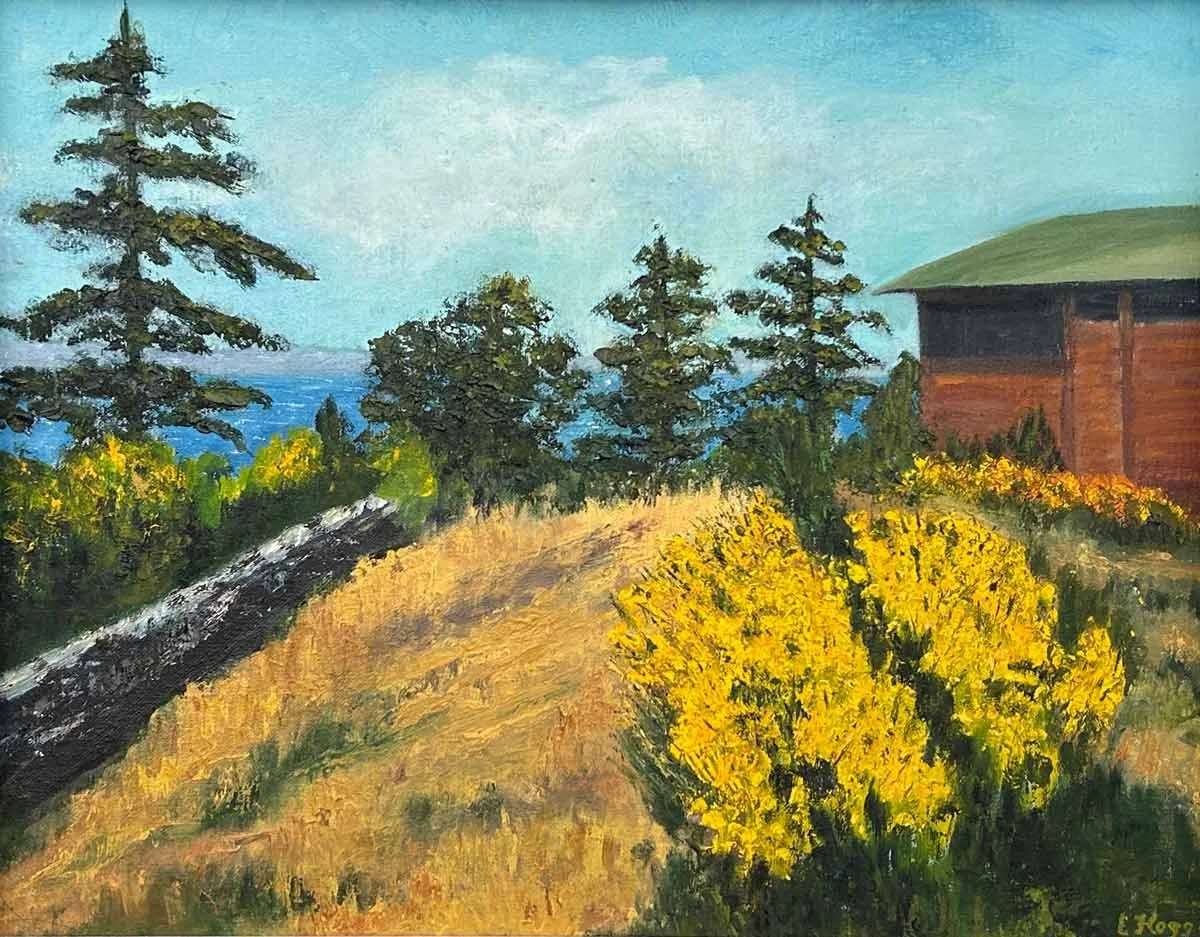
E. Hogg
Signed E. Hogg and otherwise undocumented, this modest landscape captures a place known through daily life. A fragment of regional painting history that survives without a name attached to it.
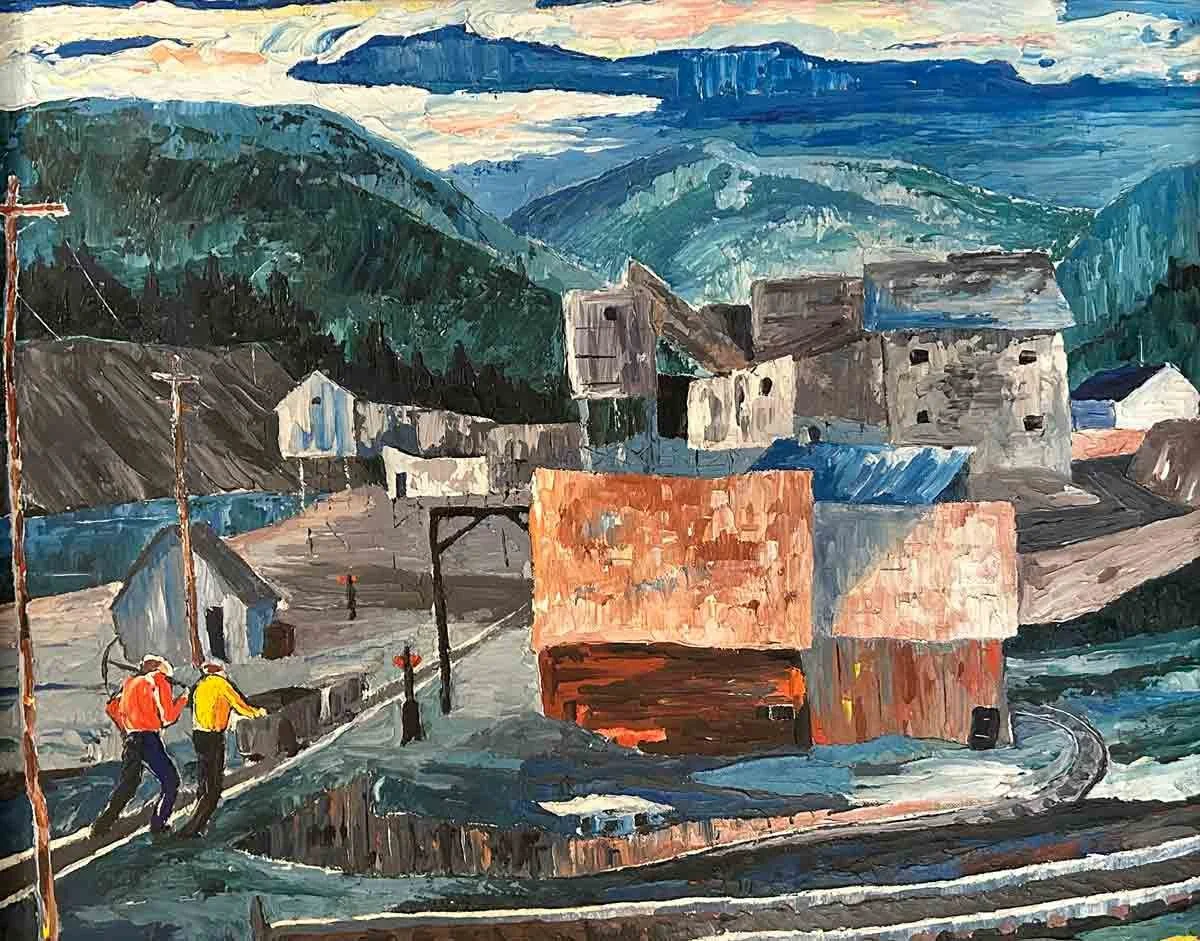
D.A. McCullagh
Working life, rendered quietly in paint.
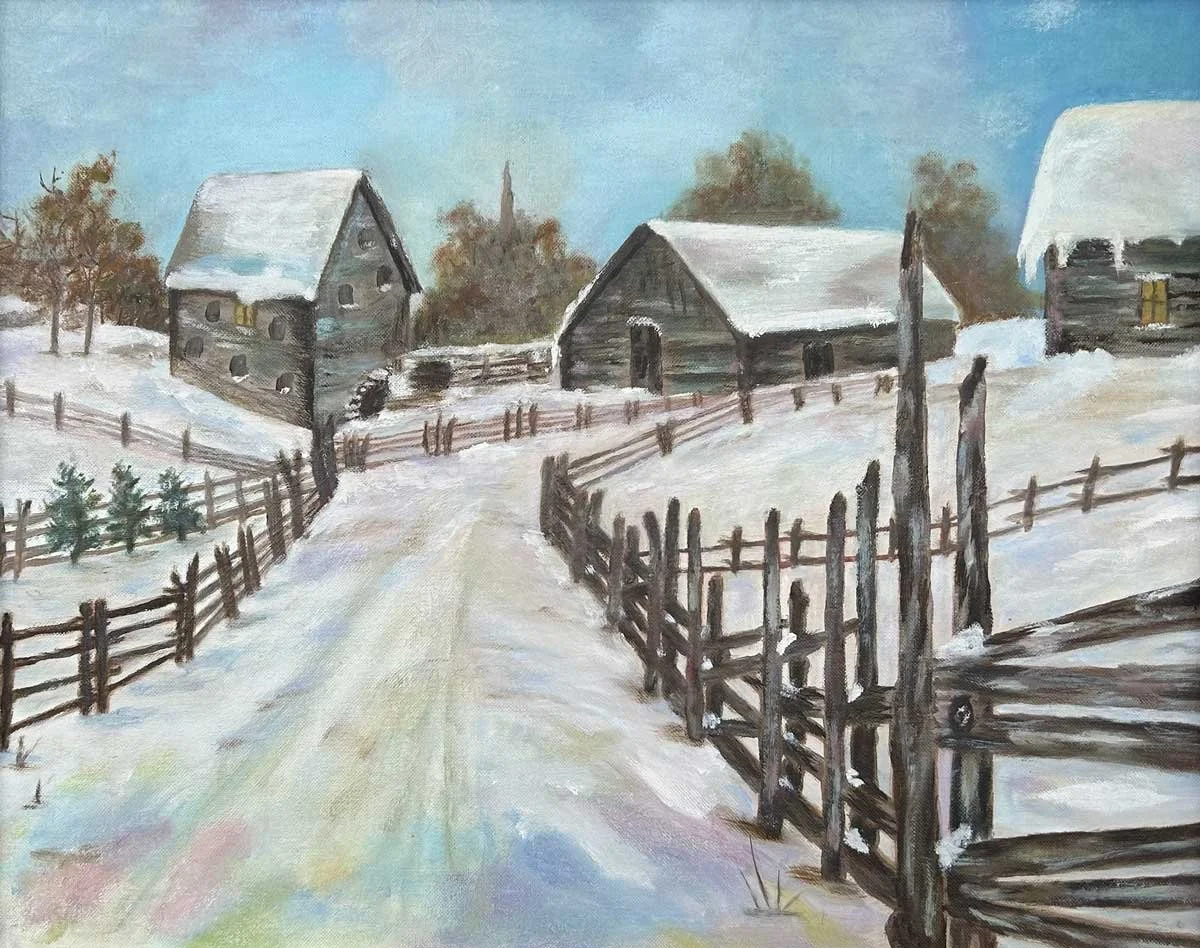
Alice N. Waldron
Painted on the same day in 1974, these two works by Alice N. Waldron feel less like standalone pieces and more like pages from a personal record.

H. Belley
I don’t know exactly where this landscape was painted, only that it’s signed H. Belley. A small cabin sits beneath towering rock faces, held in place by paint and memory. I came across it by chance, and kept it because it feels rooted—made by someone who spent time looking.
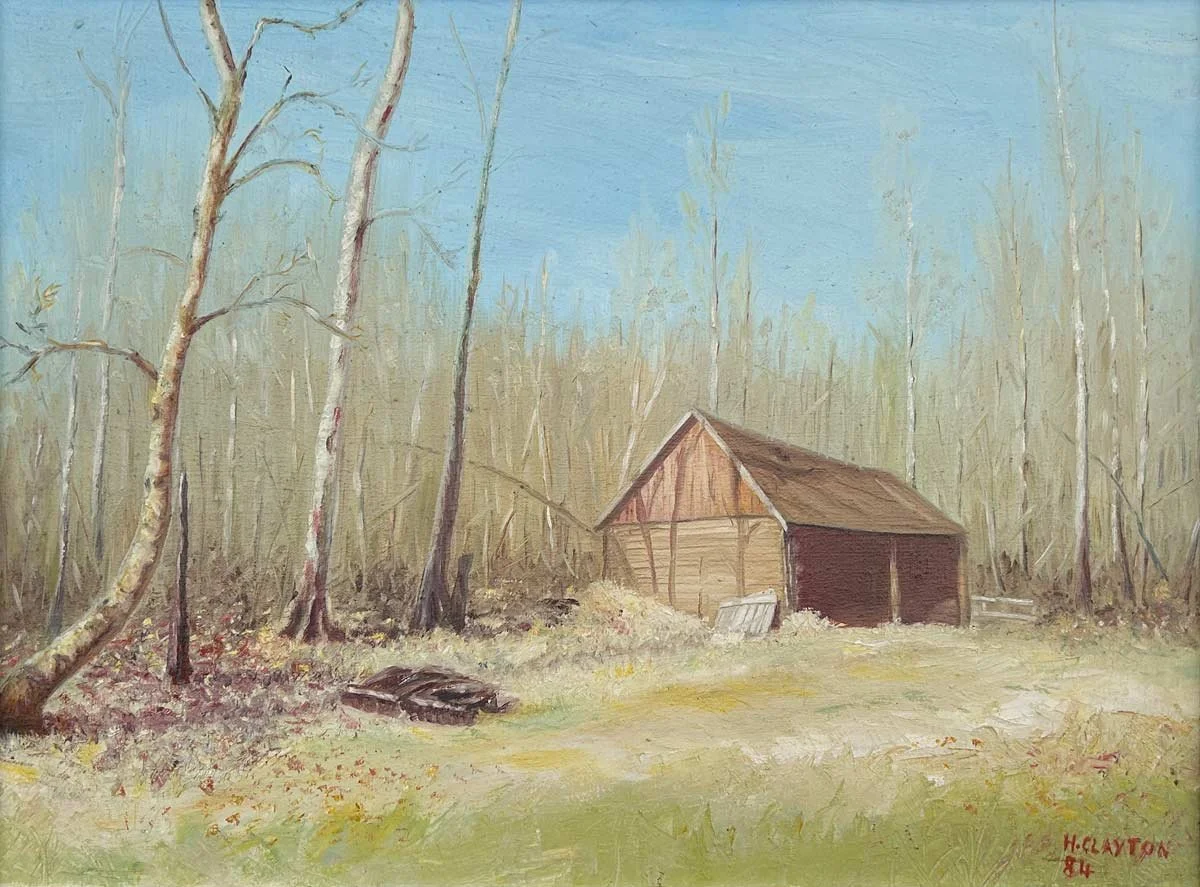
H. Clayton
I don’t know much about this painting beyond a signature: H. Clayton. There’s no date, no title—just a small structure at the edge of a clearing, carefully painted and left behind.
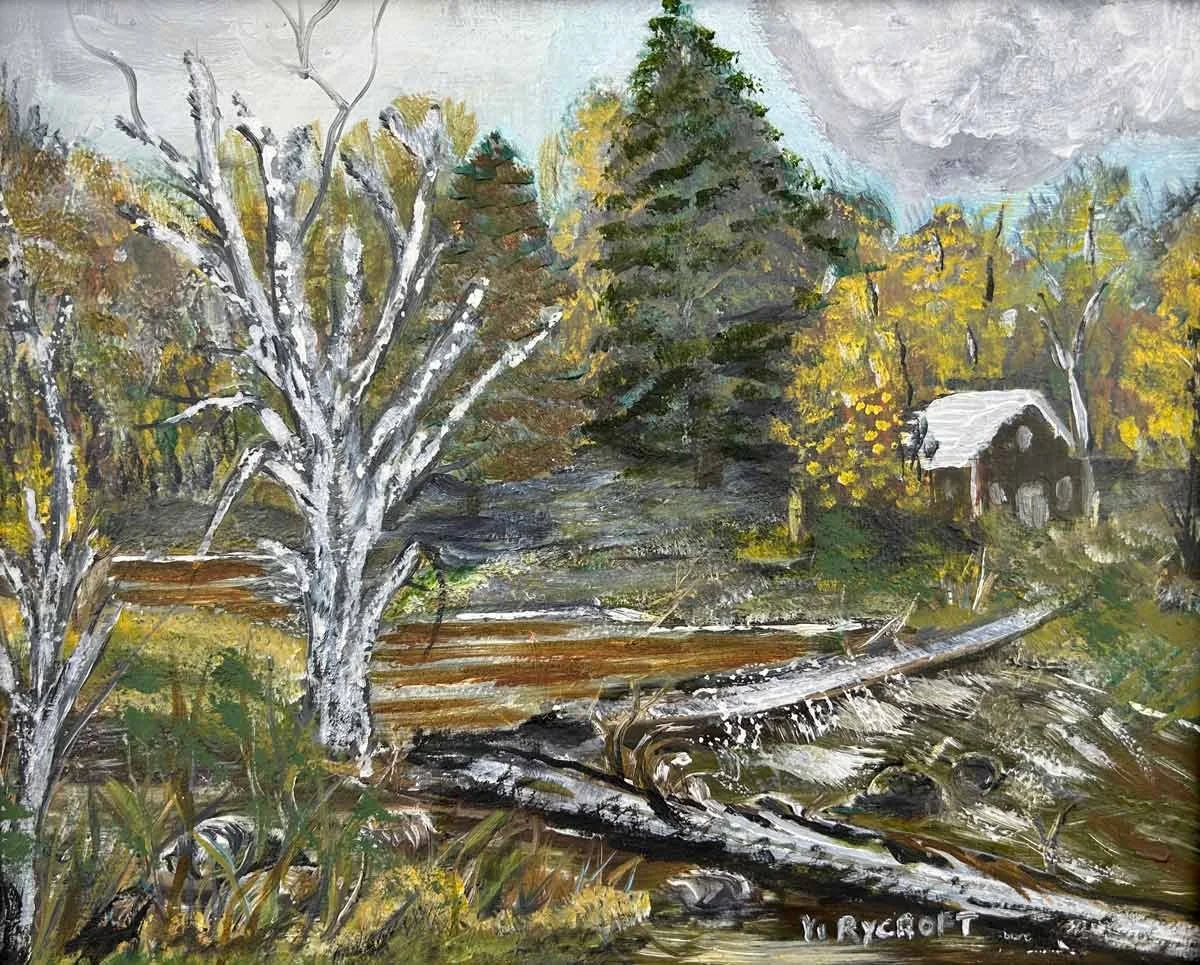
Violet Rycroft
I don’t know much about Violet Rycroft beyond what’s written on the painting itself. Signed and dated 2000, this small oil landscape feels like part of a quiet, ongoing relationship with place—one that didn’t need an audience to exist.
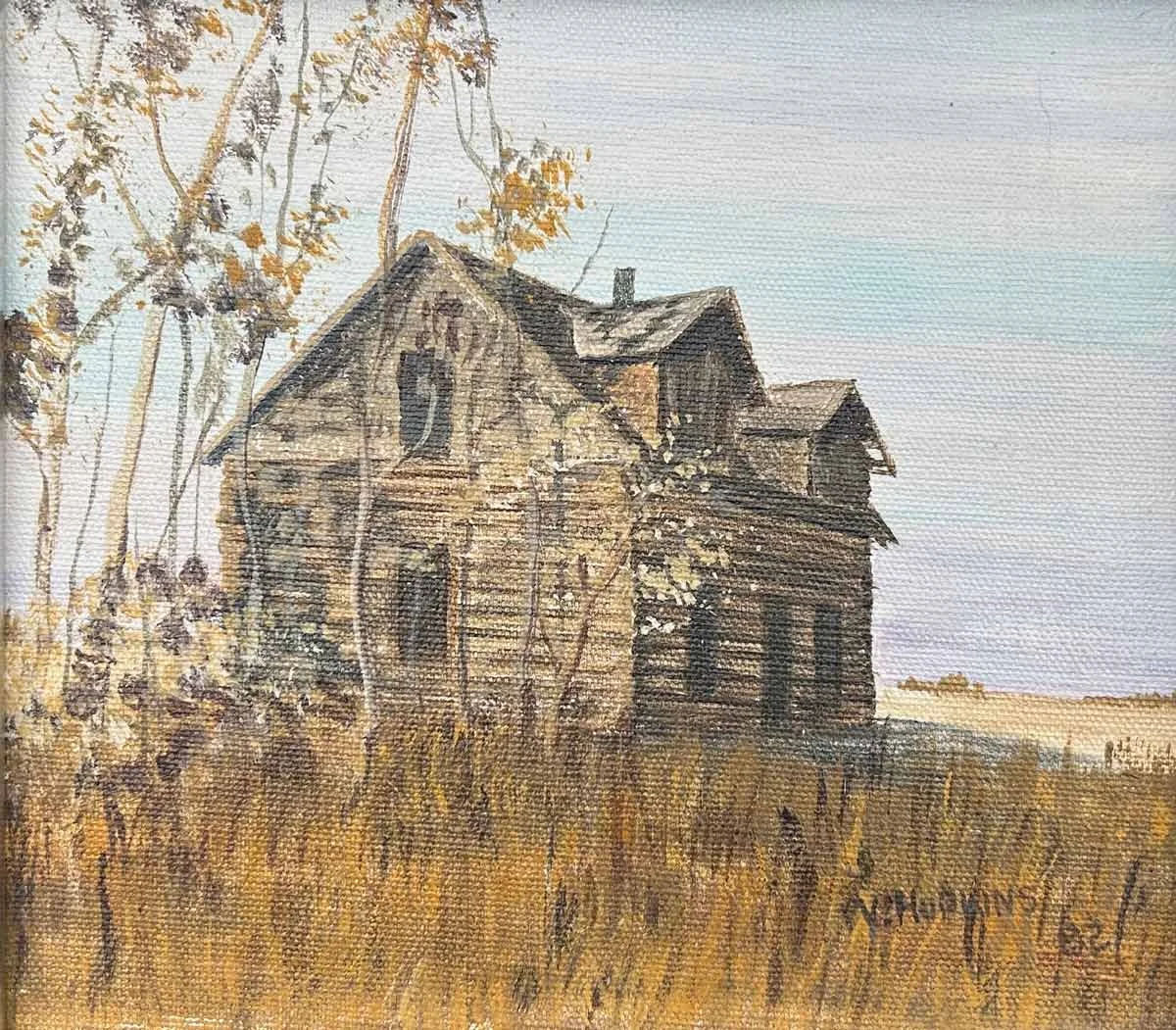
V. Hopkins
A small acrylic painting signed “V. Hopkins ’82” carries a careful record on its reverse: a farm home’s location, its original builder, and a brief note of where he went after. A Farm Home preserves a place and a life through the quiet authority of handwritten memory.
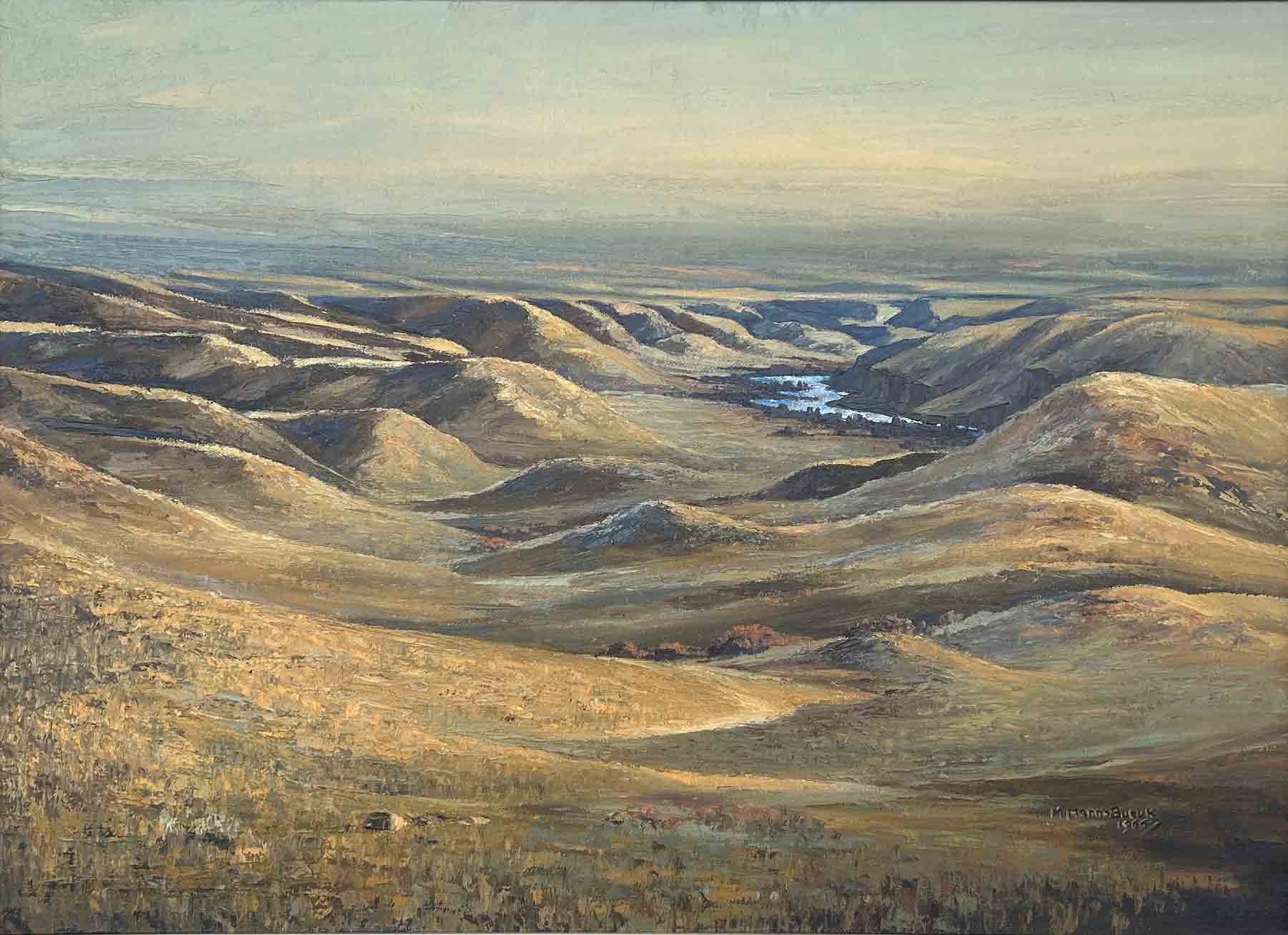
Margaret Mann-Butuk
Painted in 1966 by Margaret Mann-Butuk, Light for the Valleys captures the quiet scale and shifting light of the prairie landscape she returned to again and again. Found decades later at a church rummage sale, the painting carries both a documented exhibition history and a deeply personal connection to place.
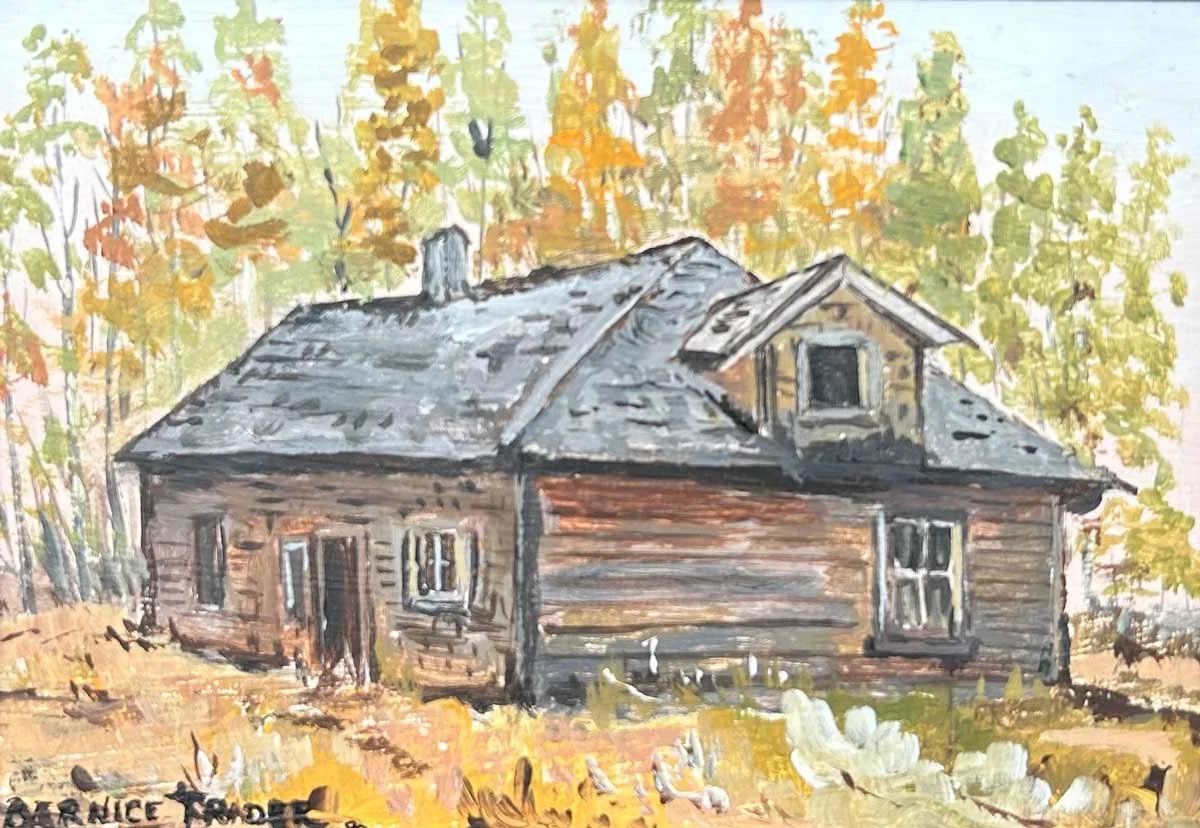
Bernice Trider
I’m drawn to this small painting because it feels quietly certain of itself. Old Home was painted in 1980 by Bernice Trider, an artist deeply rooted in Alberta’s Peace Country. It’s modest in scale, carefully made, and clearly loved—one of those works that carries a lifetime of looking, returning, and remembering. Finding it felt less like a discovery and more like being trusted with something that mattered.
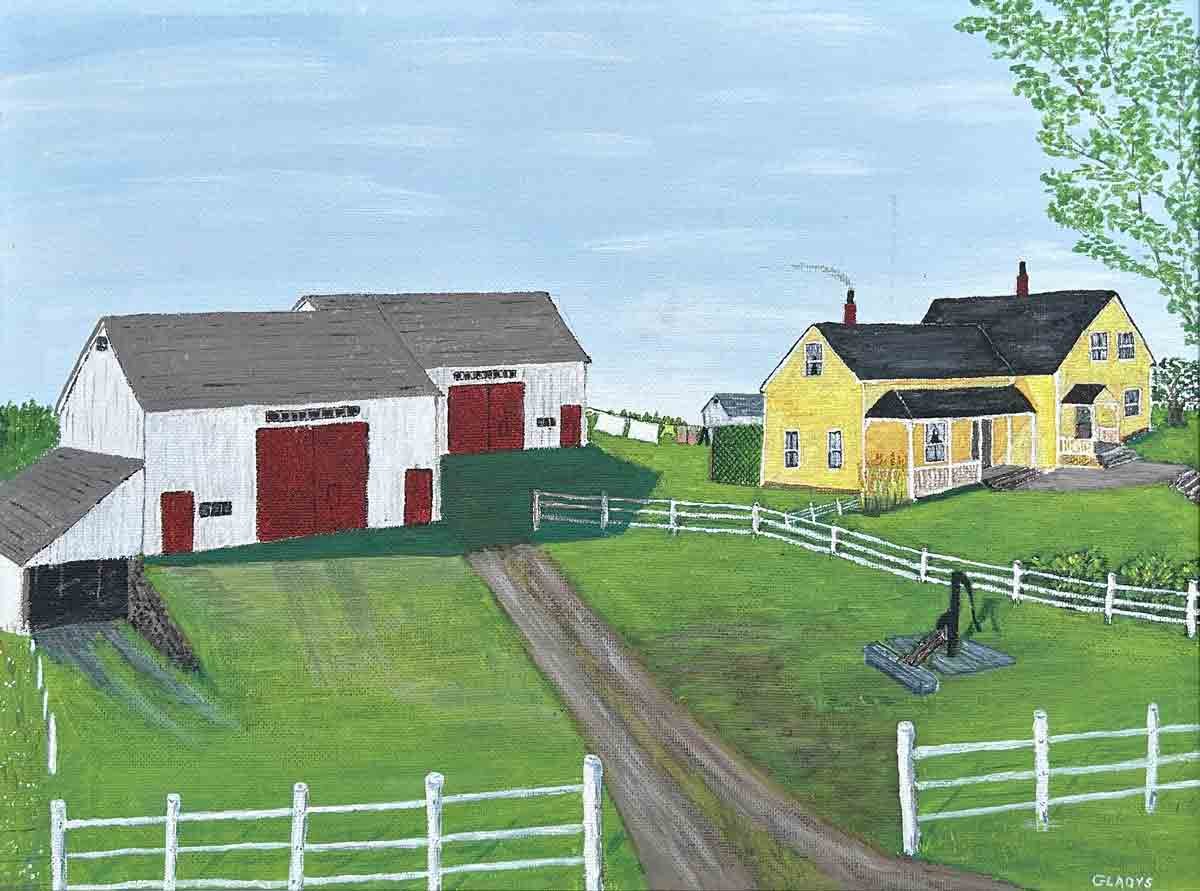
Gladys Ada (Thompson) Steeves
Painted in 1984, My Nova Scotia Home feels like a letter to a place. Gladys Ada Steeves names the location, the date, and the memory directly on the canvas, anchoring the work in a lived relationship with Central Caribou, Nova Scotia.
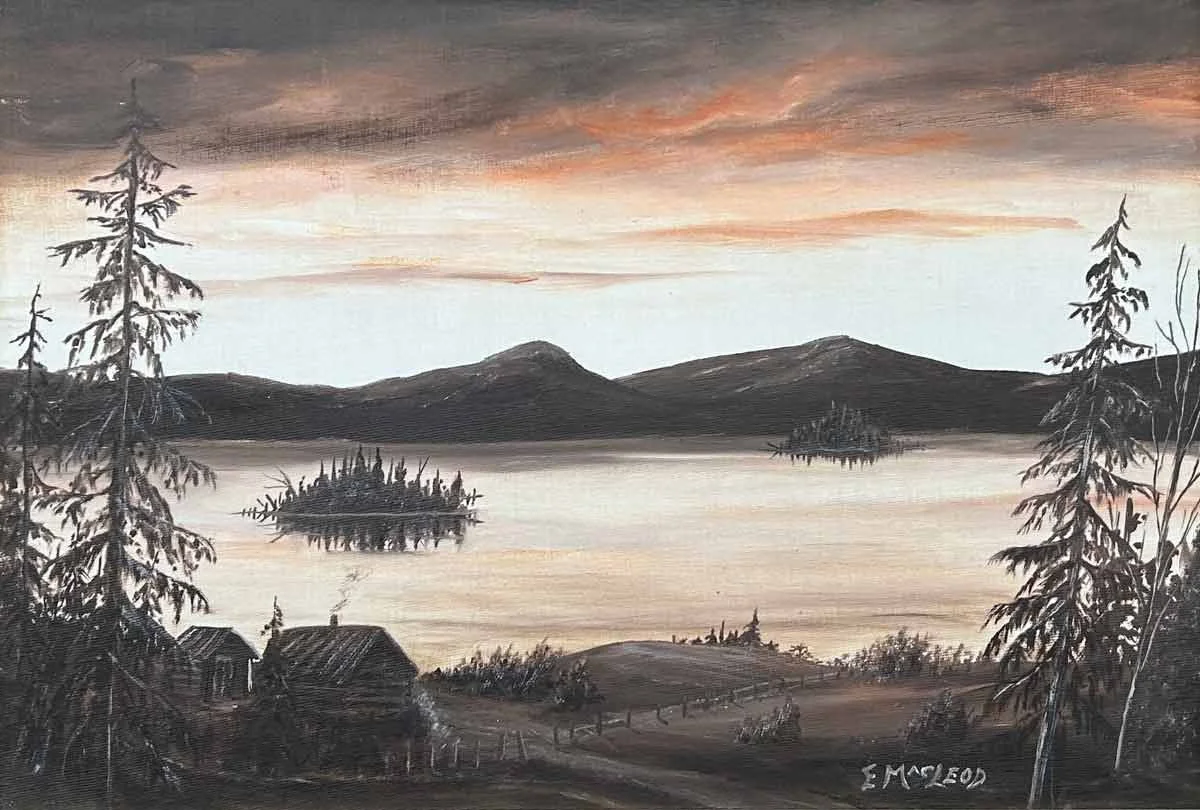
E. MacLeod
A small, unsigned-in-every-way-but-name landscape by E. MacLeod. A lake, distant hills, and a restrained palette that rewards slow looking.
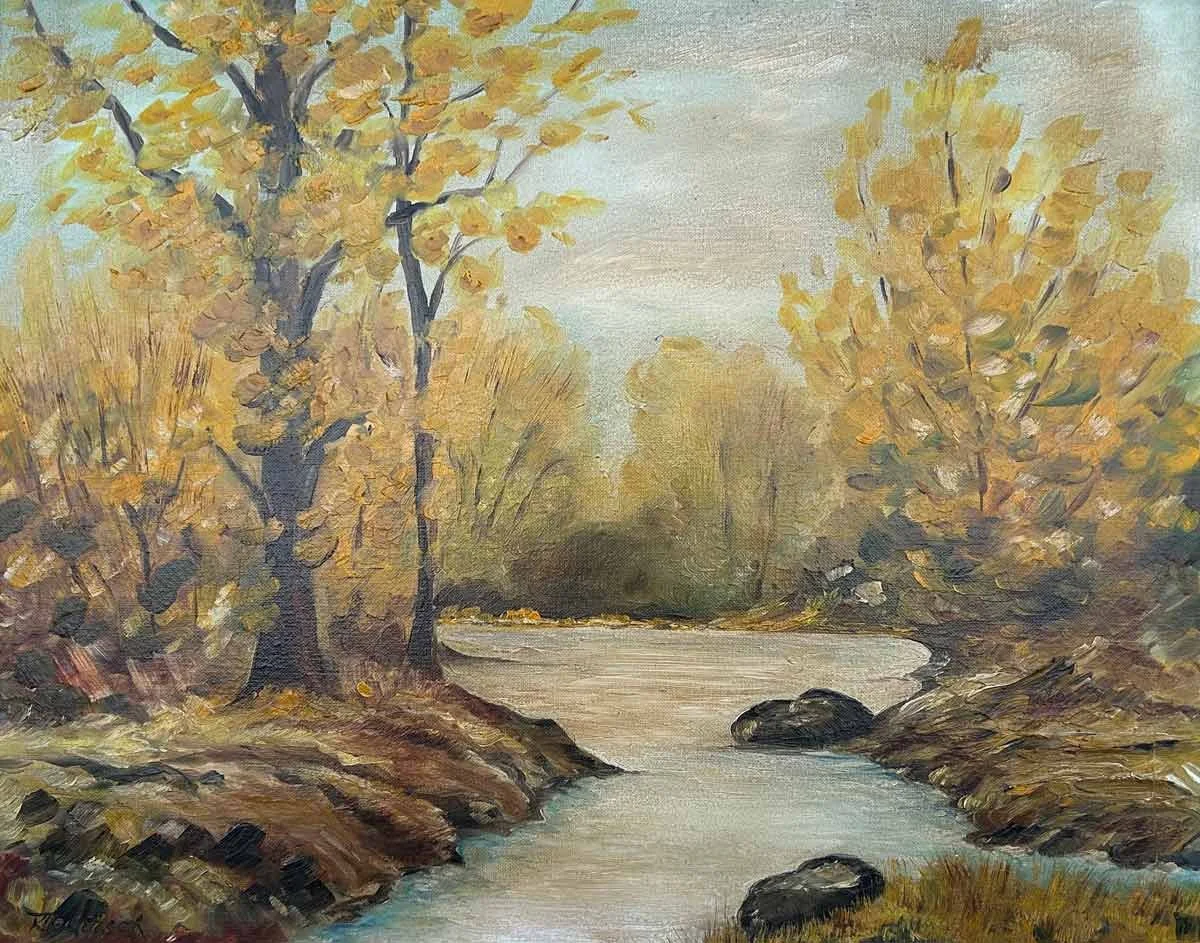
Eglantina Perlorea Swartz
A small Alberta landscape, dated June 9, 1968. A name, a place, and a painting that endured.
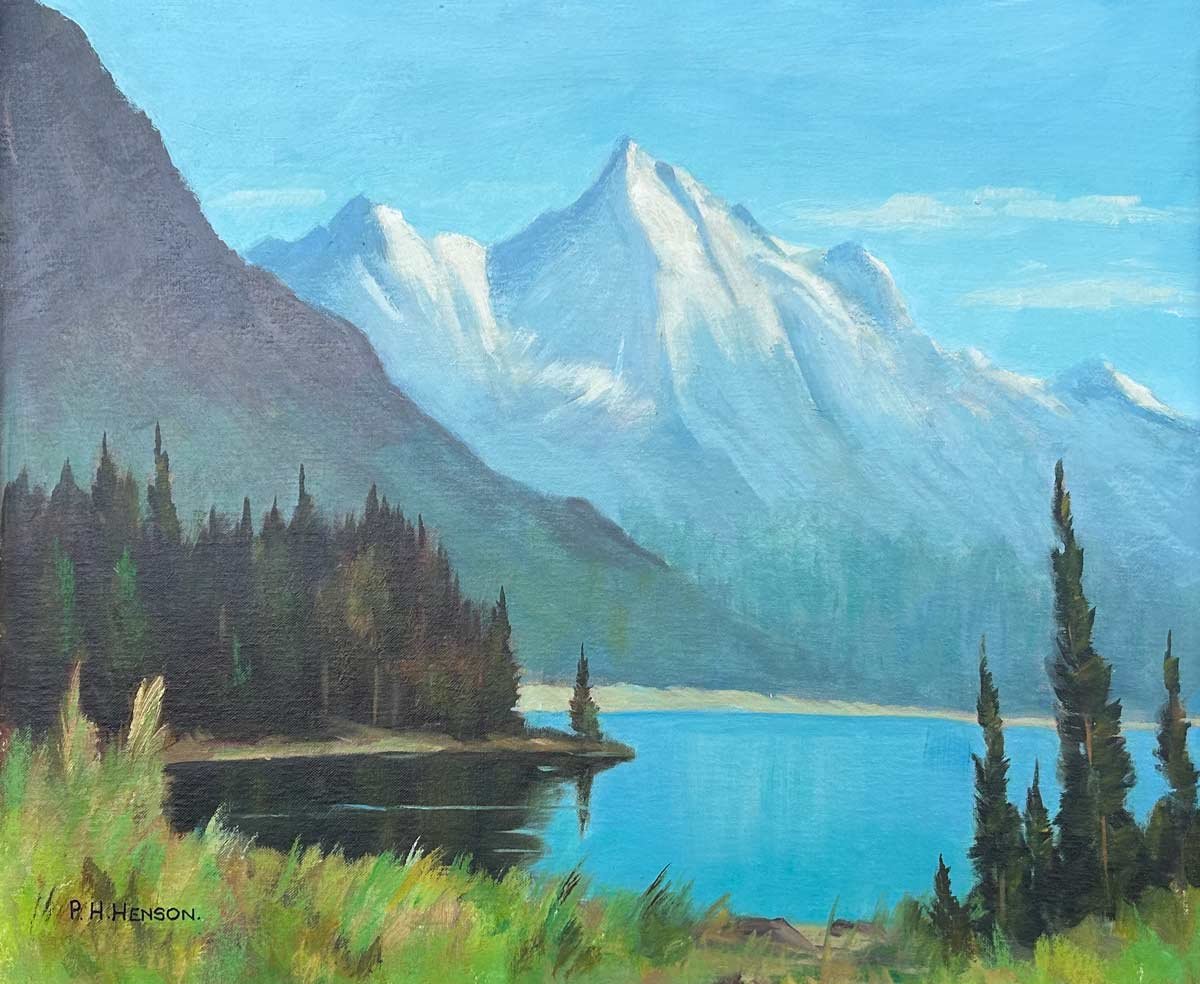
Percy Henry Edgar Henson
Painted as a demonstration in 1970, this view of Medicine Lake captures a moment of teaching as much as a place. A working painting, made to be shared.